
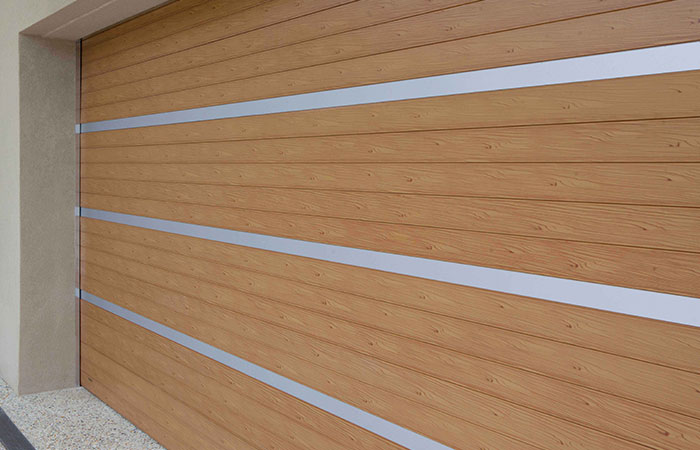
Your garage door is often the largest moving part of your house and can take up a third of your street-facing facade. It affects security, energy efficiency, kerb appeal and daily convenience. Yet most people only think about it when it breaks.
This guide compares the main garage door types used across Australia, so you can choose confidently whether you’re building, renovating or replacing a worn-out door.
The four main garage door types
1. Roller doors
The most common door in Australian homes, and for good reason. A roller door is made of horizontal steel slats that coil around a drum above the opening.
Pros
- Space-saving, since the door doesn’t swing out or slide into the garage
- Generally the most budget-friendly option
- Easy to automate and widely available in many colours
- Well suited to tight driveways
Cons
- Less insulation than sectional doors
- Can be noisier, particularly older or budget models
- Fewer style options than sectional doors
Best for: Budget-conscious homeowners, rentals, and garages with limited headroom.
2. Sectional doors
Sectional doors are made of large panels hinged together that travel up a track and rest horizontally along the ceiling.
Pros
- Strong kerb appeal, with timber-look, flat-panel, and window options
- Better insulation when fitted with insulated panels
- Quiet, smooth operation
- Full-height clearance when open
Cons
- Higher upfront cost than roller doors
- Need adequate ceiling space for the tracks
Best for: Modern homes, street-facing garages, and anyone who wants a design feature rather than just a door.
3. Tilt doors
A single-piece panel that tilts up and over, sitting partly outside the garage as it opens.
Pros
- Simple, robust construction
- Often a lower-cost option for wider openings
Cons
- The door swings out when opening, so you need driveway clearance
- Less common in new builds
Best for: Older homes, replacements for existing tilt doors, and sheds or workshops.
4. Side-hinged doors
Traditional swing doors that open outwards, like a pair of barn doors.
Pros
- A classic, character look suited to heritage and cottage-style homes
- Can be built as custom timber doors
Cons
- Need space to swing open
- Awkward to automate
Best for: Period homes and anywhere aesthetics outrank convenience.
Six factors to weigh before you buy
1. Climate and wind rating. Australia ranges from tropical cyclone zones to snow country. If you live in a cyclone-prone region, check that the door is wind-rated for your area under the relevant Australian standards, and ask your supplier for the rating in writing. Coastal homes should also look for corrosion-resistant finishes.
2. Insulation. If your garage is attached to the house or doubles as a workshop or home gym, an insulated panel door can help stabilise temperatures and reduce noise.
3. Security. Look for a quality locking system and an opener with rolling-code technology, which changes the access code each time the remote is used.
4. Opener quality and safety. A good opener matters as much as the door. Choose a model with obstruction-detection and safety features, and have it installed and tested by a qualified technician.
5. Style and street appeal. Match the door colour and profile to your roofline, window frames and front door. A well-chosen door can noticeably lift a home’s presentation.
6. Budget and lifespan. The cheapest door is not always the cheapest over ten years. Consider warranty length, hardware quality and servicing costs, not just the sticker price.
Simple maintenance to extend your door’s life
A few minutes twice a year can prevent expensive repairs:
- Wipe down tracks and remove debris
- Lubricate rollers, hinges and moving parts with a garage-door-appropriate lubricant (not general-purpose grease on tracks)
- Check that the door runs smoothly and stops and reverses when it meets an obstruction
- Look for frayed cables or sagging panels, and don’t attempt to adjust springs or cables yourself, as they’re under high tension and can cause serious injury
Book a professional service every 12 months or so, especially if the door is used daily.
When to repair and when to replace
Garage Door Repair makes sense for a faulty remote, worn rollers, or a damaged panel on an otherwise sound door. Replacement is usually the better call if the door is dented beyond repair, constantly breaking down, noisy, rusted, or lacking modern safety features.
Frequently asked questions
How long does a garage door last?
With regular maintenance, many doors last 15 to 25 years, though openers and moving parts may need replacing sooner.
Can I automate my existing garage door?
Often, yes. Many roller, sectional and tilt doors can be fitted with an opener. A technician can confirm compatibility.
Are insulated garage doors worth it?
If your garage is attached to living areas or used as a workspace, they can make a noticeable difference to comfort and noise.
Do I need council approval to replace a garage door?
It depends on your local council and whether your property is heritage-listed or in a strata scheme. Check before ordering.
Final thoughts
The right garage door balances budget, climate, security and style. If you’re unsure which suits your home, speak with a local specialist who can measure up and talk you through the options.
Looking for a new garage door or opener? Get a free quote from Aussie Garage Doors